
Hello friends!
इस पोस्ट में CPU Scheduling Criteria in OS in Hindi के बारे में पूरी जानकारी आसान हिंदी भाषा में समझाई गई है।
यदि आप इस टॉपिक के बारे में जानना चाहते हैं, तो इस पोस्ट को पूरा जरूर पढ़ें।
Table of Contents
परिचय (Introduction)
Operating System में CPU सबसे महत्वपूर्ण resource होता है। एक system में एक समय पर कई processes CPU का उपयोग करना चाहती हैं। ऐसे में OS को यह decide करना पड़ता है कि कौन‑सा process पहले चलेगा और कितना समय चलेगा। इसी decision के लिए कुछ rules बनाए जाते हैं, जिन्हें CPU Scheduling Criteria कहा जाता है।
CPU Scheduling Criteria यह तय करने में मदद करते हैं कि कोई scheduling algorithm कितना efficient है।
CPU Scheduling Criteria क्या है?
CPU Scheduling Criteria वे parameters होते हैं जिनके आधार पर किसी CPU scheduling algorithm की performance को evaluate किया जाता है।
Featured Snippet Definition:
CPU Scheduling Criteria वे मापदंड (parameters) हैं जिनसे यह पता लगाया जाता है कि CPU scheduling algorithm कितना अच्छा काम कर रहा है।
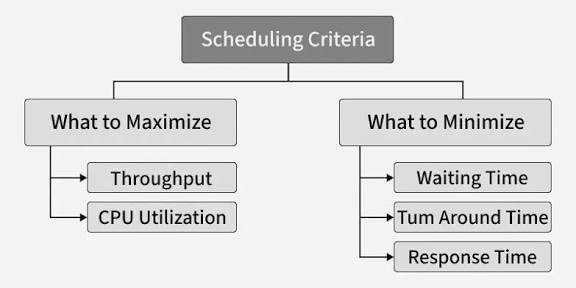
CPU Scheduling Criteria के मुख्य प्रकार
1. CPU Utilization
CPU जितना ज्यादा समय busy रहता है, system उतना ही efficient माना जाता है।
- Ideal: CPU हमेशा busy रहे
- Objective: CPU idle time कम करना
2. Throughput
एक निश्चित समय में कितने processes complete हुए।
- High throughput = better performance
Example: अगर 1 second में 10 processes complete हो रहे हैं, तो throughput अच्छा माना जाएगा।
3. Turnaround Time
Process के submit होने से लेकर completion तक का कुल समय।
Formula:
Turnaround Time = Completion Time – Arrival Time
Turnaround time जितना कम होगा, user satisfaction उतनी ज्यादा होगी।
4. Waiting Time
Process को ready queue में जितना समय wait करना पड़ा।
Formula:
Waiting Time = Turnaround Time – Burst Time
कम waiting time वाला algorithm ज्यादा efficient माना जाता है।
5. Response Time
Request देने के बाद process को पहली बार CPU मिलने में जितना समय लगा।
यह criterion interactive systems (जैसे time‑sharing OS) में बहुत important होता है।
6. Fairness
हर process को CPU मिलने का equal और fair chance मिलना चाहिए।
- Starvation नहीं होना चाहिए
7. Predictability
Same input पर system का behavior predictable होना चाहिए।
- Real‑time systems में बहुत जरूरी
Different Systems के लिए Criteria Importance
| System Type | Important Criteria |
|---|---|
| Batch OS | Throughput, Turnaround Time |
| Time Sharing OS | Response Time, Fairness |
| Real Time OS | Predictability, Deadline |
Real-Life Example
Mobile phone में जब आप app open करते हैं, तो आपको instant response चाहिए। इसलिए mobile OS response time और fairness पर ज्यादा focus करता है।
Advantages of Using Scheduling Criteria
- Best algorithm selection
- Better system performance
- User satisfaction increase
- Resource utilization improve
Disadvantages
- Criteria conflict कर सकते हैं
- One algorithm सभी criteria satisfy नहीं कर सकता
FAQs – CPU Scheduling Criteria
CPU Scheduling Criteria क्यों जरूरी हैं?
Algorithm की performance evaluate करने के लिए।
सबसे important scheduling criterion कौन‑सा है?
System type पर depend करता है (batch, time‑sharing, real‑time)।
Response time और turnaround time में क्या अंतर है?
Response time first CPU access तक का समय है, turnaround time total execution time होता है।
निष्कर्ष (Conclusion)
CPU Scheduling Criteria Operating System में सही scheduling algorithm चुनने के लिए बहुत जरूरी हैं। अलग‑अलग systems के लिए अलग‑अलग criteria ज्यादा महत्वपूर्ण होते हैं। OS exams और interviews के लिए यह topic अत्यंत महत्वपूर्ण है।
👉 Next Topic: डेडलॉक डिटेक्शन क्या है? – Deadlock Detection in Hindi