
Hello friends!
इस पोस्ट में PCB in Hindi – Process Control Block क्या है? के बारे में पूरी जानकारी आसान हिंदी भाषा में समझाई गई है।
यदि आप इस टॉपिक के बारे में जानना चाहते हैं, तो इस पोस्ट को पूरा जरूर पढ़ें।
Table of Contents
परिचय (Introduction)
Operating System में जब भी कोई program run होता है, तो वह process बन जाता है। System में एक साथ कई processes run होती हैं, इसलिए OS को हर process की पूरी जानकारी track करनी पड़ती है। यही जानकारी Process Control Block (PCB) में store की जाती है।
PCB को process का identity card भी कहा जाता है, क्योंकि इसमें process से related सारी जरूरी information होती है।
Process Control Block (PCB) क्या है?
Process Control Block (PCB) एक data structure है जिसका उपयोग Operating System किसी process की सारी जानकारी store करने के लिए करता है।
Featured Snippet Definition:
Process Control Block (PCB) वह data structure है जिसमें Operating System किसी process से संबंधित सभी महत्वपूर्ण जानकारी store करता है।
PCB की आवश्यकता क्यों होती है?
- Multiple processes को manage करने के लिए
- Context switching के दौरान process state save करने के लिए
- Scheduling और resource allocation के लिए
- Process execution को control करने के लिए
PCB के बिना OS multitasking efficiently perform नहीं कर सकता।
PCB में कौन-कौन सी जानकारी होती है?
1. Process ID (PID)
हर process का एक unique identification number होता है।
2. Process State
Process की current state:
- New
- Ready
- Running
- Waiting
- Terminated
3. Program Counter
यह बताता है कि process का next instruction कौन-सा execute होगा।
4. CPU Registers
Process के registers की current value store होती है, ताकि context switch के बाद process वहीं से resume हो सके।
5. CPU Scheduling Information
- Priority
- Scheduling queue pointers
- CPU burst time
6. Memory Management Information
- Base address
- Limit address
- Page table या segment table information
7. I/O Status Information
- Allocated devices
- Open files list
- I/O requests
PCB और Context Switching
जब CPU एक process से दूसरे process पर switch करता है, तो उसे Context Switching कहते हैं।
Context Switching में PCB की भूमिका:
- Current process की state PCB में save होती है
- Next process का PCB load किया जाता है
- CPU registers update होते हैं
- Process execution resume होती है
PCB के बिना context switching possible नहीं है।
PCB का Structure (Logical View)
PCB को logically तीन भागों में समझा जा सकता है:
- Process Identification
- Processor State Information
- Process Control Information
PCB और Process Table
Operating System सभी PCBs को Process Table में store करता है। हर entry एक process के PCB को represent करती है।
Real-Life Example
Teacher के पास students का attendance register होता है, जिसमें हर student की details होती हैं। उसी तरह OS के पास PCB होता है, जिसमें हर process की details store होती हैं।
Advantages of PCB
- Efficient multitasking
- Fast context switching
- Better resource management
- Process isolation
Disadvantages of PCB
- Memory overhead
- Context switching cost
- OS complexity
FAQs – PCB (Process Control Block)
PCB क्या है?
PCB एक data structure है जिसमें process की सारी जानकारी store होती है।
PCB कहाँ store होता है?
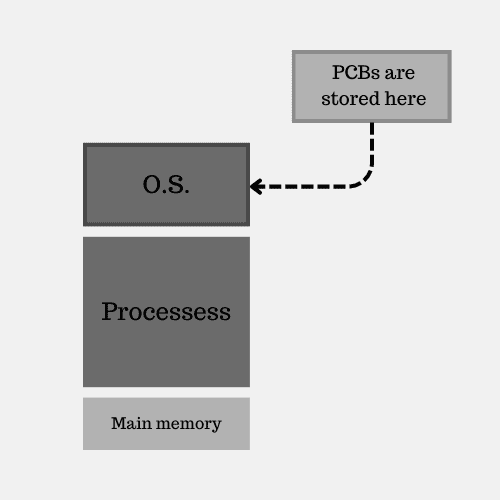
Main memory में, process table के अंदर।
PCB और process में क्या अंतर है?
Process execution unit है, PCB उसका record होता है।
निष्कर्ष (Conclusion)
Process Control Block (PCB) Operating System का एक अत्यंत महत्वपूर्ण component है। Multitasking, scheduling और context switching जैसी core functionalities PCB पर ही depend करती हैं।
✅ OS exams, interviews और academic studies के लिए यह topic बहुत ही महत्वपूर्ण है।